CARTR Plus
How to Structure OB and FOIVF Cycles for Autologous Oocyte Banking in CARTR Plus
How to structure Oocyte Banking (OB) and Frozen Oocyte IVF (FOIVF) cycles for autologous oocyte banking in CARTR Plus, and the linking mistake BORN flags most.

- CARTR Plus
- Oocyte banking
- BORN
- FOIVF
Autologous oocyte banking is one of the harder journeys to record correctly in CARTR Plus, and BORN's 2025 dataset review flagged it as a recurring source of data-quality issues. The clinical picture is straightforward: a patient banks eggs now and comes back months or years later to use them. The reporting picture is where it gets awkward, because that single journey becomes several linked CARTR Plus cycles, and if the pieces land in the wrong place, the record stops reconciling.
Here is how to structure those cycles correctly, the one mistake that causes most of the trouble, and how to catch it before the file reaches BORN.
Why one journey becomes more than one cycle
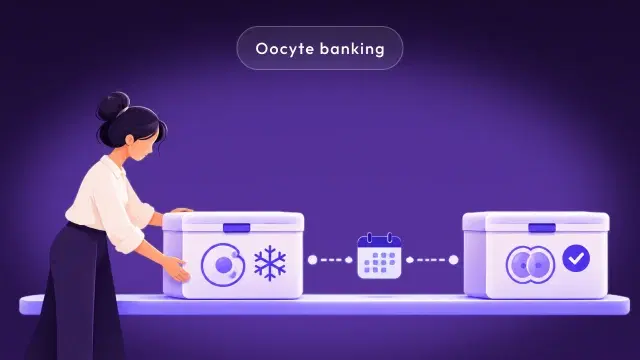
The patient undergoes retrieval and the oocytes are frozen. Later they return, the oocytes are thawed and inseminated by IVF or ICSI, and embryos are created. A fresh transfer may happen in that same treatment cycle if it is clinically appropriate. Any remaining embryos are cryopreserved and transferred in one or more later frozen embryo transfer cycles.
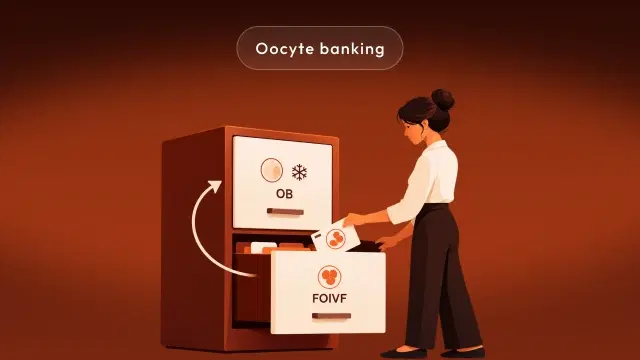
In CARTR Plus that maps to a primary Oocyte Banking cycle and one or more secondary cycles linked back to it. The link is the whole point. It is what ties the eggs retrieved at banking to the embryos and outcomes that come later, sometimes years later.
The correct CARTR Plus structure
| Cycle | Type | Primary or secondary | What it records |
|---|---|---|---|
| Cycle 1 | Oocyte Banking (OB) | Primary | Stimulation, retrieval, cryopreservation |
| Cycle 2 | Frozen Oocyte IVF (FOIVF) | Secondary, linked to the OB cycle | Thaw, insemination, embryology, PGT, and a fresh transfer if one occurs |
| Cycle 3+ | Frozen Embryo Transfer (FET) | Secondary, linked to the OB cycle | Each subsequent frozen embryo transfer |
The Oocyte Banking (OB) cycle
When the patient banks eggs, create the OB cycle as the primary and record only what has actually happened at this stage:
- Reason for the treatment cycle, which must be either elective oocyte banking or oocyte banking for gonadotoxic reasons. Choose the one that matches the indication.
- Stimulation and retrieval details.
- Oocyte origin, which should be fresh autologous oocytes.
- Adverse events if any occurred, otherwise None or No.
What does not belong here is just as important: do not record insemination, embryology, or embryo transfer on the OB cycle. At the banking stage none of that has happened. The eggs are retrieved, frozen, and stored, and the cycle should say exactly that and nothing more. This is the single rule that keeps the rest of the journey clean.
The Frozen Oocyte IVF (FOIVF) cycle
When the patient returns to use the banked eggs, create a FOIVF cycle as a secondary linked to the original OB cycle. This is where the lab work is recorded:
- Oocyte thaw.
- Insemination and fertilization.
- Embryology, and PGT if it was performed.
- A fresh embryo transfer, if one happens in this cycle, recorded here within the FOIVF cycle.
Because the FOIVF cycle links back to the OB cycle, the eggs retrieved earlier and the embryos created now stay connected as one journey.
The Frozen Embryo Transfer (FET) cycles
Any embryos cryopreserved from the FOIVF cycle and transferred later are entered as their own FET cycles, one per transfer, each linked back to the OB cycle rather than to the FOIVF cycle.
The mistake BORN sees most
The most common error, and the one the 2025 CARTR Plus review kept surfacing, is recording insemination, embryology, or transfer details inside the OB cycle instead of in a linked FOIVF secondary cycle.
It usually is not carelessness. It happens because the EMR treats the whole journey as one continuous episode, so when the patient comes back, the new lab work gets appended to the original banking record instead of opening a new linked cycle. The result is an Oocyte Banking cycle that appears to have inseminated eggs and transferred embryos in the same cycle they were banked, which cannot happen in a banking journey. It breaks the connection between the retrieval and the eventual outcome, and cycles like that get flagged and sent back for rework.
A few smaller pitfalls tend to travel with it:
- Using a generic IVF reason on the OB cycle instead of elective or gonadotoxic banking.
- Setting oocyte origin to something other than fresh autologous on the OB cycle.
- Creating a brand-new primary cycle when the patient returns, instead of a secondary linked to the OB cycle, which orphans both records.
- Linking later FET cycles to the FOIVF cycle rather than to the OB cycle.
How EmbryoLogix catches it before submission
EmbryoLogix checks the shape of the journey, not just individual fields. When it prepares a CARTR Plus file, it looks at how the cycles fit together. If insemination, embryology, or transfer data appears on an Oocyte Banking cycle, it flags it before the file is exported and points to the FOIVF cycle where it belongs. It confirms that the OB reason is one of the two banking reasons, that oocyte origin is fresh autologous, and that FOIVF and FET cycles link back to the correct OB cycle rather than floating free or duplicating as new primaries.
Those corrections happen during review, so the file that reaches BORN is already structured the way the registry expects, and the journey reconciles the first time.
The quick version
- Banking: OB primary cycle. Reason is elective or gonadotoxic banking, origin is fresh autologous, and you record stimulation and retrieval only.
- Never record insemination, embryology, or transfer on the OB cycle.
- Patient returns: FOIVF secondary cycle linked to the OB cycle, recording thaw, insemination, embryology, PGT, and a fresh transfer if it happens here.
- Later transfers: separate FET cycles, each linked to the OB cycle.
Get the OB cycle right and stop it from absorbing downstream data, and the rest of the banking journey stays accurate all the way through to the outcome.
About the author